Siar agus Aniar 11
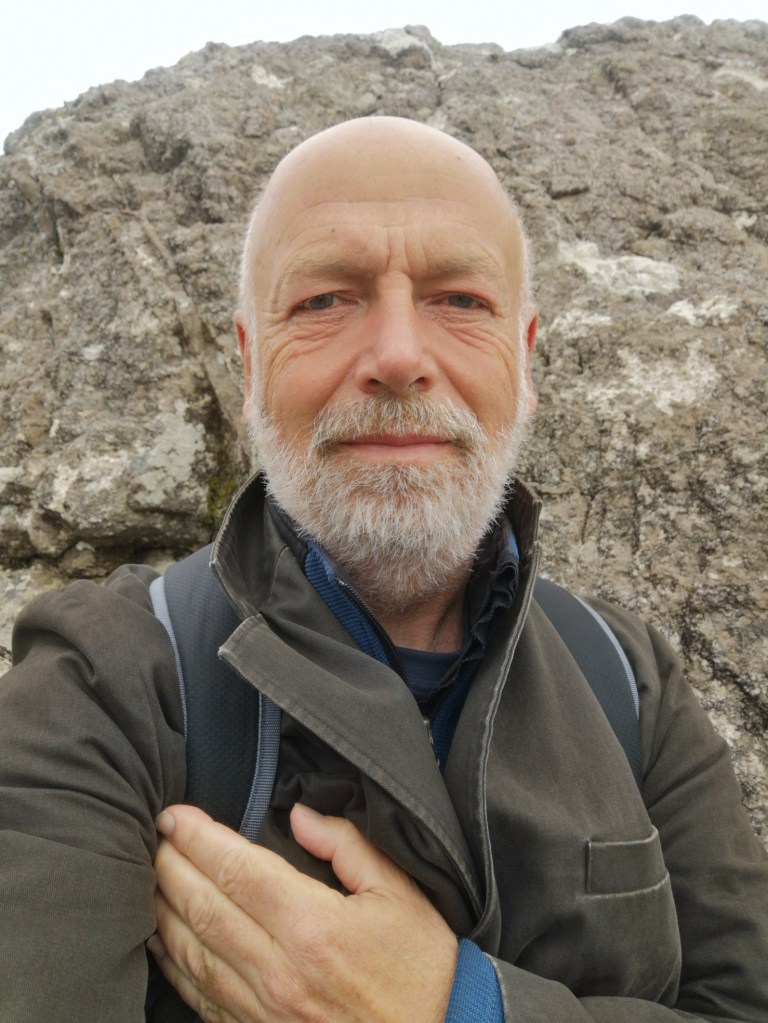
I went walking to Loch na Naomh – the Lake of the Saint.
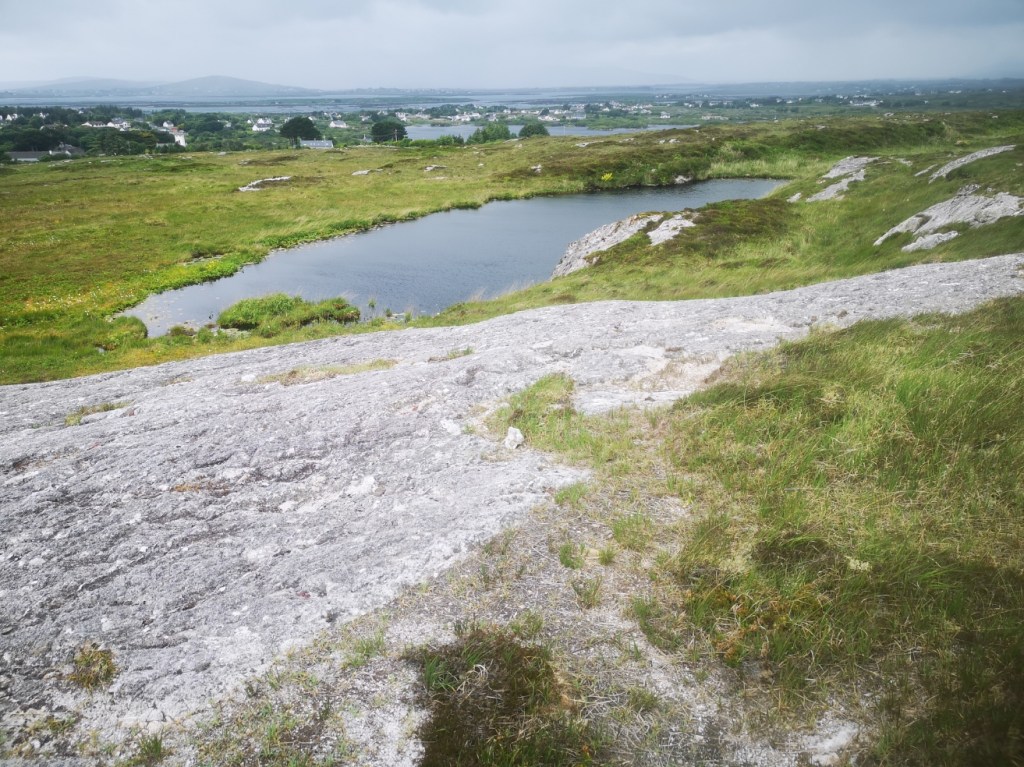
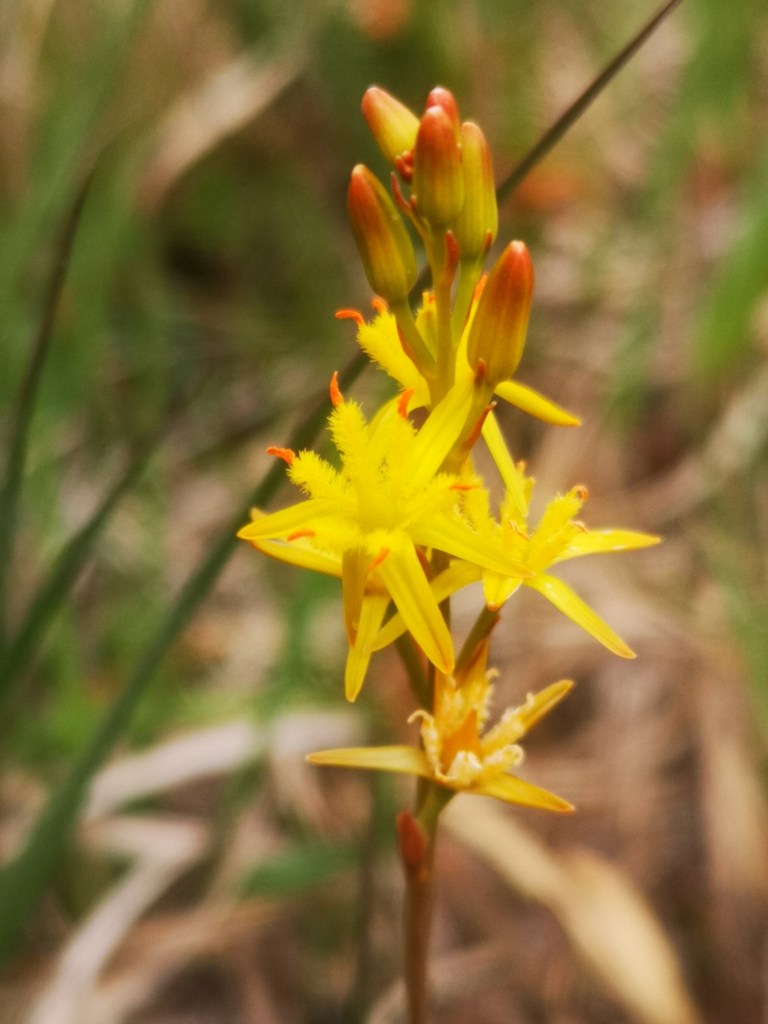
It is always windy there. The lake is on top of a granite hill between An Cheathrú Rua and Galway Bay in Conamara. Few trees, many bogs, low heather and gorse, wonderful wildflowers and orchids. The bedrock is white and can make you think of snow.
Leaving Bóthar an tSagairt on Cnoc na Pobail, I followed a long stone wall that that ran seemingly without purpose across that lonely land. It did lead directly to the highest point of land in Ceathrú Rua. The wind began to pick up significantly as I walked and occasionally a fine misty rain was whipped into my face with stinging force. From the summit, I could see ocean all around me. The Árann Islands, shrouded in mist, Leitir Mór to the west, and Ros an Mhíl to the east. It felt like the top of the world. Like another world.
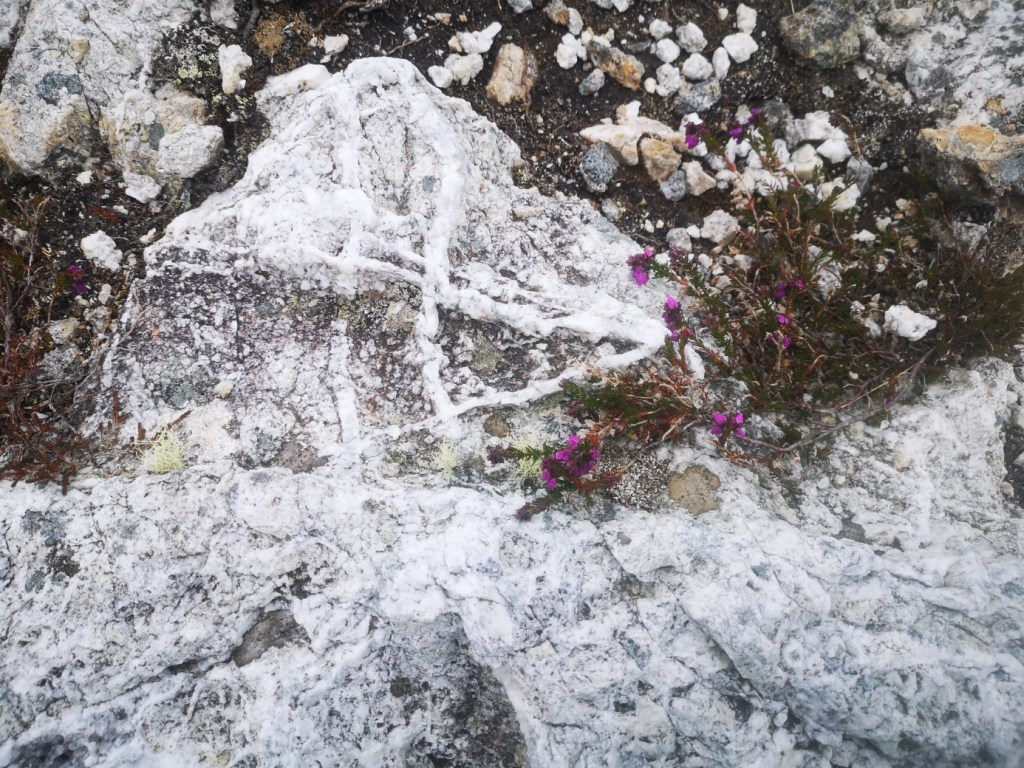
The very rocks seems to be revealing symbols to me written in the crystalline quartz veins. Were they messages? The land here is always on the verge of revealing a story.
According to legend, fadó, fadó in Éireann, a group of holy men were heading to the Árann Islands. The line of monks seemed endless, such was the great faith of the Irish people, and stretched from the mountain all the way back to the monastery. They stopped to look for water on the mountain.
All they could find was the hoof print of a cow containing a very small amount of water. One of the holy men dipped his hand in and was able to get a drop – an braon uisce.
As he drank it, the braon grew and grew and became Loch na Naomh. An loch draíocht! The story also says that the monk had forgotten his holy book at the monastery. He passed the word back down the líne. Whispers all the way back to the monastery. The monks passed the book all the way to the front man.
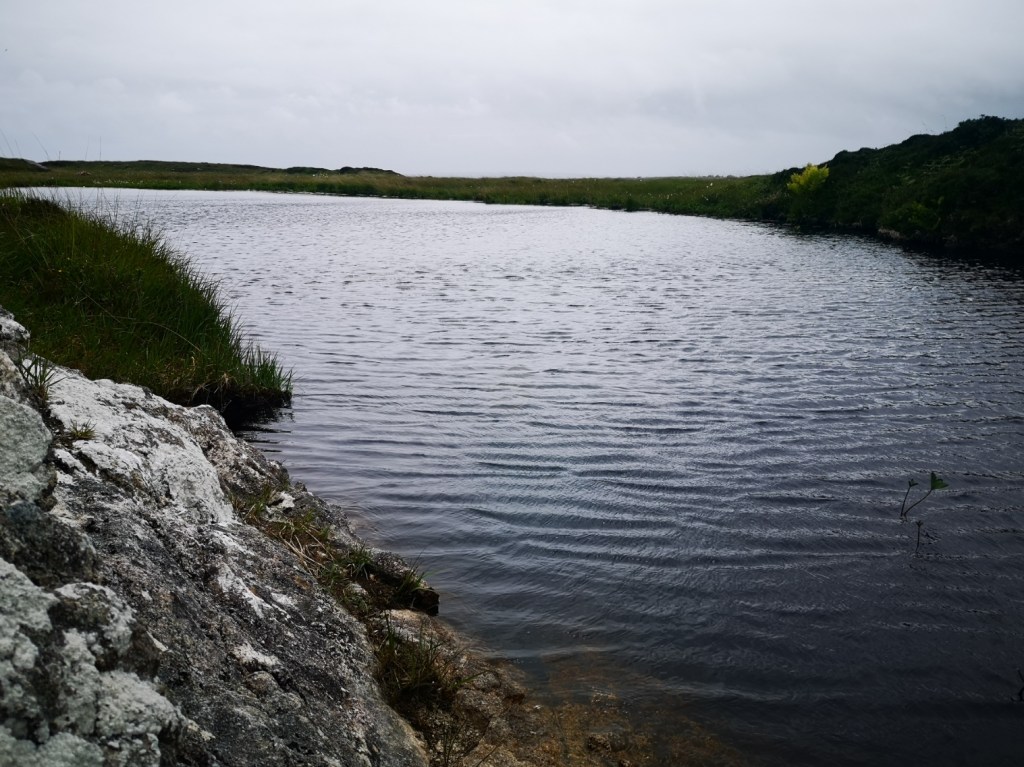
There was a pátrún celebrated at Loch na Naomh up until the 50s in honour of Saint Mac Dara. A pátrún is a religious procession. They are still common around Ireland and often dedicated to one of the many indigenous saints of this land. They are often focused on holy wells. The tradition of holy wells probably originates from the ancient pre-Christian period of Ireland. Apparently a bonfire was lit on top of the mountain near Loch na Naomh on St John’s Eve. This is possibly another pre-Christian tradition that survived until very recently. Imagine that bonfire, visible for miles around! It must have been an impressive sight and an important festival to celebrate the arrival of summer.
Mac Dara is a very popular saint in An Cheathrú Rua. The local church and school bear his name. There is a small church on a nearby island that he built. Fishermen revered him. His pátrún was celebrated on 16 July. Mac Dara is generally translated to mean “son of the oak”.
Little is known about the life of the St MacDara. According to lore, his first name was Sionnach, which is the Irish word for fox. Traditionally, Connacht fishermen had a strange phobia of foxes, which were believed to bring ill-luck, and so the saint was referred to as St MacDara, son of Dara, rather than St Sionnach.
Modern scholars, however, say that the name is not pronounced Sionnach, but Síonach or Síothnanch, which would associate the saint with síon, the Irish word for stormy weather.
https://galwaycitymuseum.ie/blog/the-feast-of-st-macdara-la-fheile-mhic-dara-16-july/?locale=en
What is culture? I have been in the Gaeltacht of An Cheathrú Rua for several weeks now with the Siar agus Aniar – Ireland and Canada Ambassador Exchange program. Daily life in a rural area is really not that new to me and I love it here! I feel at home. I have been participating in an Irish language course at the Acadamh (University of Galway). There are many layers to the Irish culture that are slowly becoming revealed. Folklore and history are definitely one fascinating and beautiful layer. Litterature, poetry, music are another. New litterature, new poetry, new music are there too. There are many things that could join this list. Language is not just the act of learning a new word to replace a word in your native language. It also means living the culture of that language. Living in the Gaeltacht has given me a rich opportunity to immerse myself in the culture that sustains Gaeilge and has revealed an important, perhaps critical, elements in the Irish language revival movement. The saying in Irish is ó ghlúin go glúin – from knee to knee, from generation to generation. This is a living culture. An teanga beo.
“Tradition is not the worship of ashes, but the transmission of fire.”
― Gustav Mahler
 Cumann an Ghleanna