Siar agus Aniar 10
In Canada, we know that language has politics built into it. The suppression of minoritized languages is an overtly political act. It is a situation that has been going on for millenia in Ireland. Some people try to keep language and politics separate. Is this really possible? I recently spent a few days in Béal Feirste and have been thinking about what it means to choose this language.
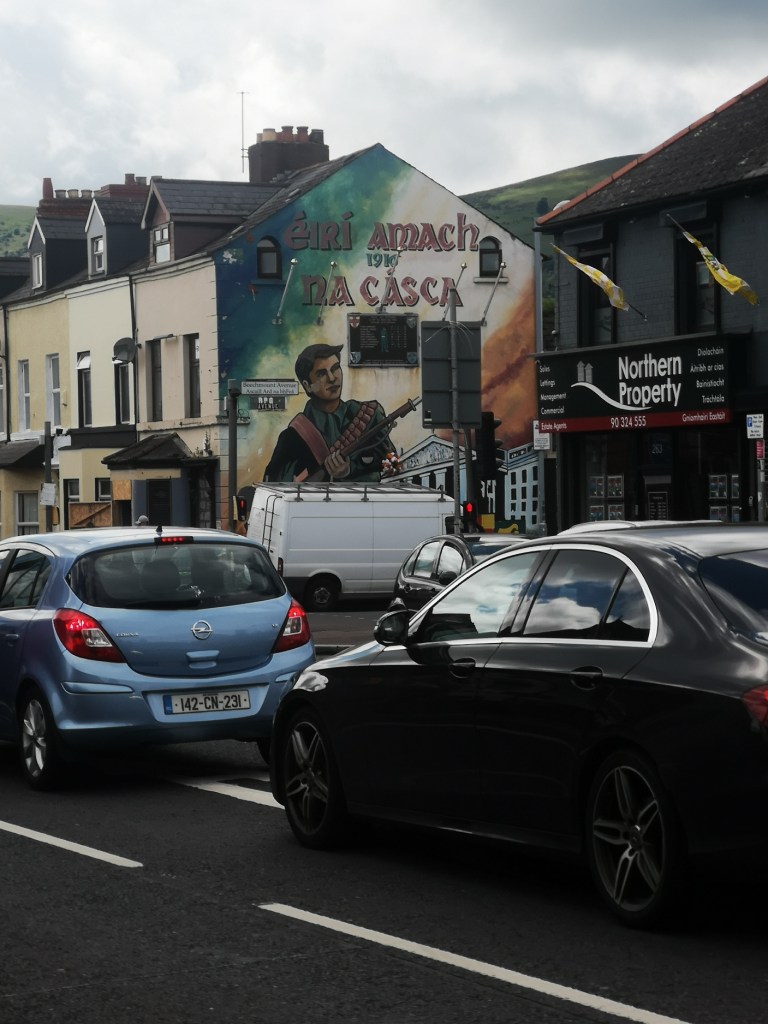
The name of Béal Feirste has been anglicized to Belfast. As an Ambassador on the Siar agus Aniar Ireland and Nova Scotia exchange, I have been visiting some of the Gaeltachtaí in Ireland. What is life like for those who live in areas where Irish is the language of daily life?
When you arrive in Ireland, you will immediately notice the bilingual road signs. But they are not really bilingual names. Most places have two names. One name is generally the original Irish name. The other names are generally called the « English » names but are actually an anglicized version of the original Gaeilge name. English phonetics were imposed upon the original Gaeilge name.
An Cheathrú Rua
The Red Quarterland, with red meaning a red or rough land
Carraroe
Logainm is the Gaeilge word for a geographic place name. In Gaeilge, the geographic names carry meaning and tell us a story about the geography, ecology, or social history of an area. Some of the Gaeilge names have been attested for several hundred years. They are an ancient cultural testamony of the Irish people on this land.
English penal laws forbade Catholics from:
Holding public office
Marrying Protestants
Owning weapons
Military or legal professions
Receiving public education of any sort
Redress from arrest without cause
Purchasing land
Inheriting land from Protestants
Leasing land for more than 31 years
Owning a house worth more than £5
Speaking the Irish language
Building churches
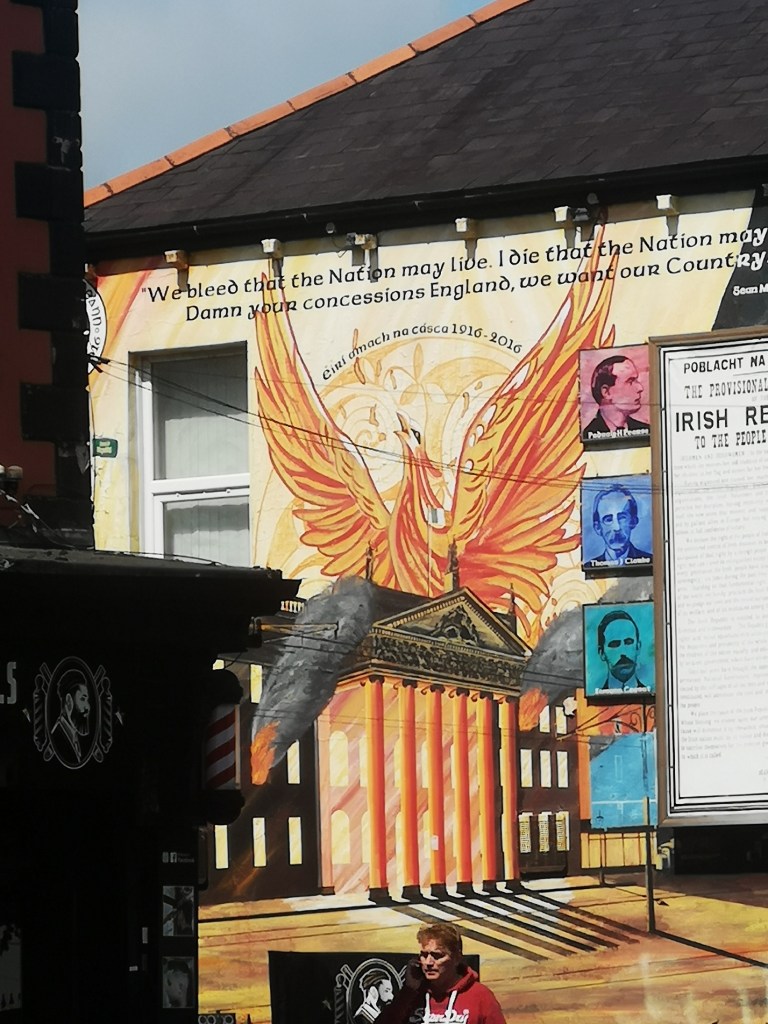
Similar laws existed in Nova Scotia that targetted Acadians, Scottish, Mi’kmaq, Black Loyalists, and others.
Forbidding public education and the speaking of the Irish language were horrendous and evil tools used to destroy the Irish identity. Along with these draconian lawas, the English changed or anglicized ALL Irish placenames.
When placenames became anglicized, they became meaningless. We have seen the same with Mi’kmaq names in Nova Scotia. Making these names gibberish is an effective way to disconnect a people from their lands. This was only a part of the strategy to destroy the Irish.
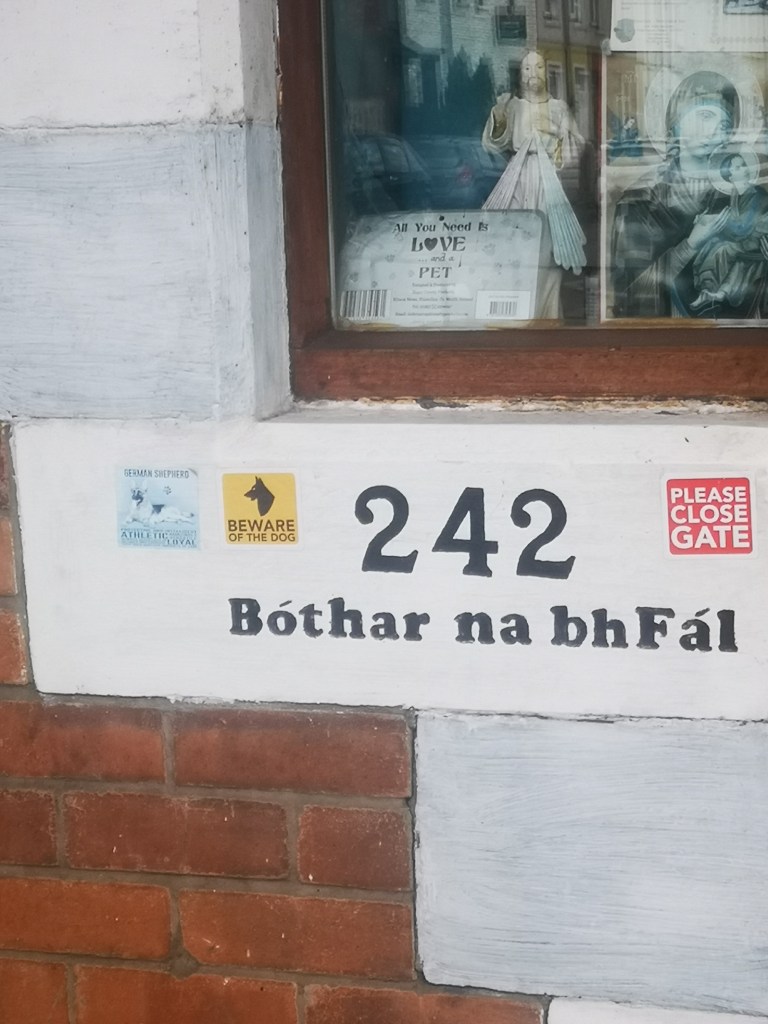
The anglicisation process took place over the course of several centuries. Officially, however, towns were renamed as part of the Ordnance Survey of Ireland in 1830. The method was simple. The Irish words that made up the placenames were transcribed into traditional English spellings.
As placenames became anglicised, they stopped making sense. Putting English spellings on words in a different language produced absurd results. They didn’t mean anything in either language.
https://www.euronews.com/travel/2021/05/24/what-s-in-a-name-the-anglicisation-of-ireland-s-towns-and-why-it-matters
Béal Feirste
Mouth of sandbar ford
Belfast
Loch Lao
Inlet of the Calf
Belfast Lough
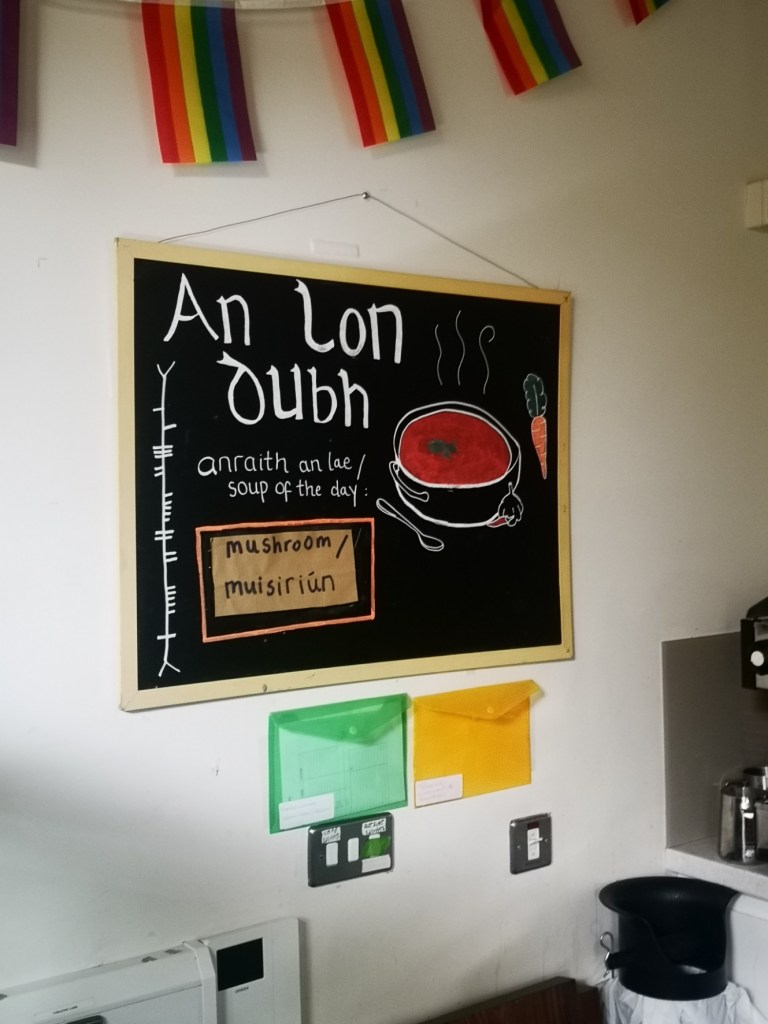
The inlet that Béal Feirste is found on was called Loch Lao. It is a name of ancient origin. The first written record of this name can be found in a poem called Lon Dubh Loch Lao, transcribed by a monk in the margins of a manuscript around the 9th Century. It is the oldest recording of the original name of this feature. The traditions and history of a place becomes partially dormant or moribund when we lose its meaning.
Int én bec
ro léic feit
do rinn guip
glanbuidi:
fo-ceird faíd
ós Loch Laíg,
lon do chraíb
charnbuidi.
The small bird
that let a whistle
from a beak
pure yellow:
it let a note
over Loch Lao
blackbird on a branch
yellow blossom.
https://cartlann.org/authors/udar-anaithnid/lon-dubh-loch-lao/
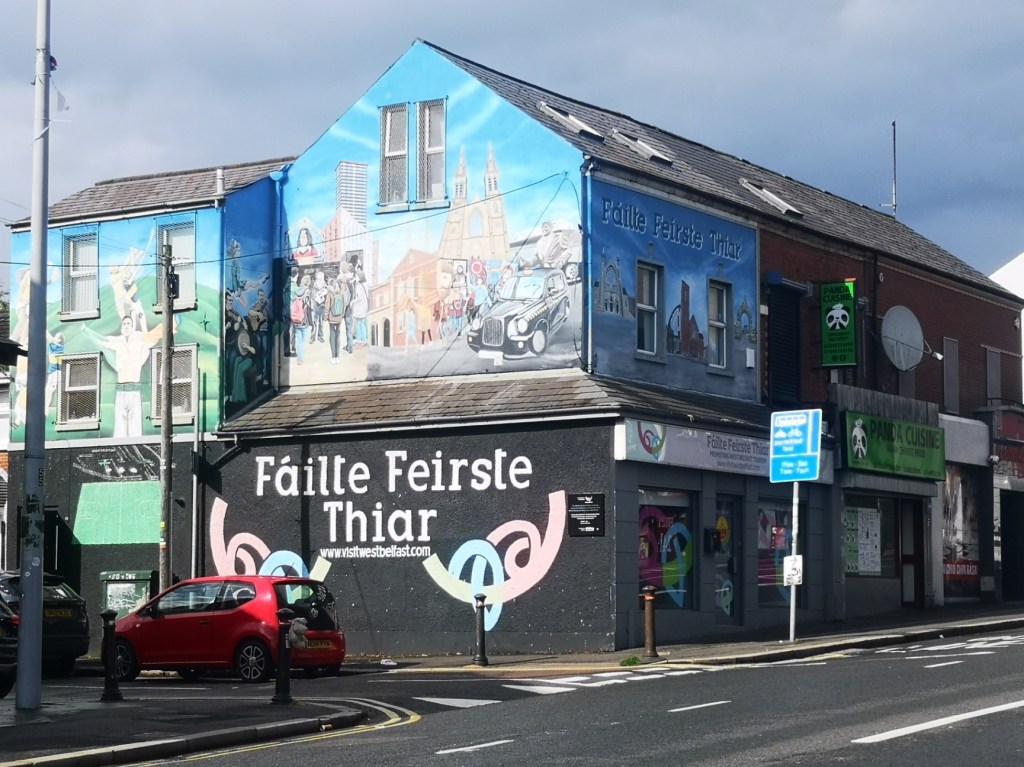
In Ireland, the Official Languages Act 2003 amended the law by giving legal status to both the Gaeilge and English names of a place.
Cultural genocide, as practiced by the British, was harsh and global in scope. It was direct and purposeful. Contrast this today with the similar impact of globalized and corporatized culture. The process is different but the effect is similar.
Cultural genocide is the intentional destruction of a culture. It does not necessarily involve killing or violence against members of the group in question although that can be part of it. Cultural genocide also includes the eradication of cultural activities, artifacts, language and traditions. Again, we sadly have the extensive examples of cultural genocide as practiced in Canada targetting indigenous cultures.
Learning about the history of cultural genocide in Ireland, reflecting on the parallels and differences in Nova Scotia, I am aware that a grounding in this history is an important part of my reflections about giving new life to our suppressed cultures. Being part of Siar agus Aniar, an Ambassador Exchange between Ireland and Nova Scotia, is giving mé exposure to the Gaeltachtaí of Ireland. Visiting the Gaeltacht of Béal Feirste has brought mé face to face with a history that is still raw and with people who have responded in the most brilliant way possible. When we understand better the efforts made to destroy our languages, the resulting marginilization and degradation of its status in our communities, the shame put upon it, we can begin to make change. It is by no means easy to undo centuries of stigmatization.
Names have meaning. The replacement of names is intentional. It can be a very powerful act of decolonization. Using traditional names in our own languages is an important step in re-establishing our places in the world and reminding people that we are still there.
 Cumann an Ghleanna
Another thoughtful and thought-provoking article, Paul. Of course, many of the restrictions on the Irish followed them in their migrations to our part of the world — Newfoundland in my case
LikeLike
Very well written and well thought out commentary on this subject.
LikeLike