Siar agus Aniar 7
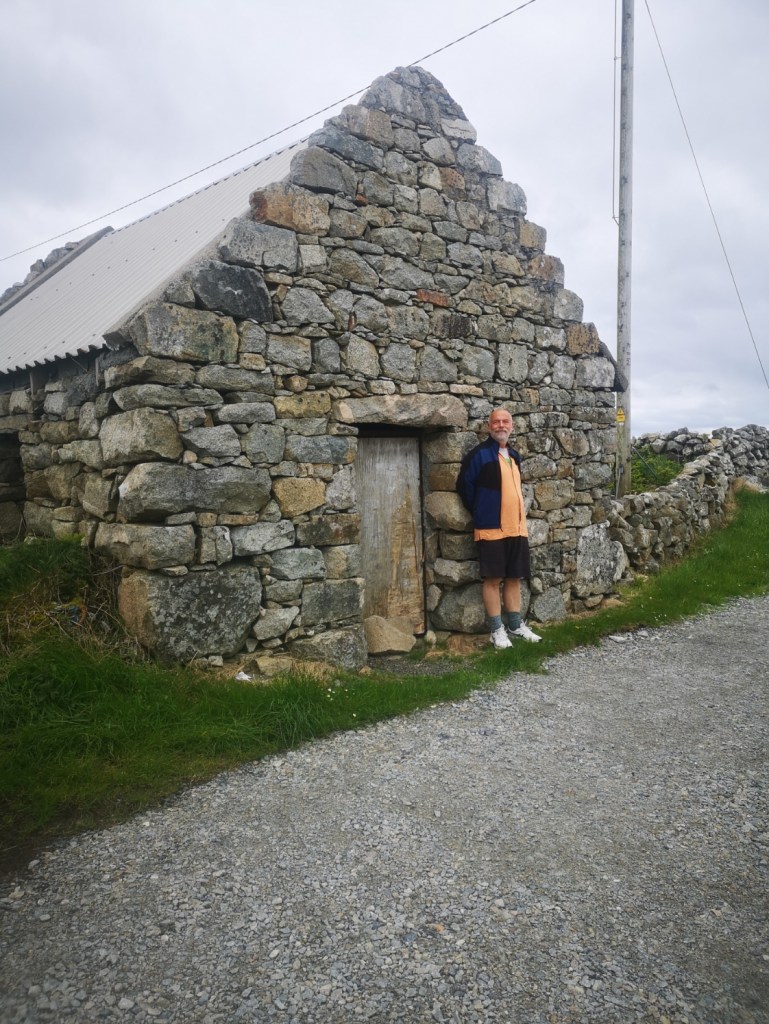
One of the goals of Siar agus Aniar | Siar agus an Ear | East and West Ambassadors’ Exchange: Ireland-Maritime North America Language and Cultural Pilot Program is to live life in a Gaeltacht. Gaeltachtaí are those regions in Ireland where Irish is the daily language of the community. What is life like here? How is the language being supported? What are the challenges?
May is truly a beautiful month in Ireland. I was eating lunch outdoors at a picnic table, enjoying the fresh air. A group of about 10 secondary boys (around 15 years of age) came by and gathered around another table. I had seen them walking from the Gaelscoil in town earlier. They all spoke English.
I was not specifically listening to their conversation as it was a beautiful, sunny, late spring day. Out of the blue, one voice siad: “as Gaeilge” – meaning “in Irish”. A forceful reply came back: “Fuck Gaeilge”. The conversation remained in English.
It goes without saying that I may have misinterpreted the conversation or taken something out of context. After all, the whole thing took but 5 seconds to transpire. Maybe I am making a mountain out of a molehill? But, assuming that I heard and understood correctly, a couple of things come to mind about life in the Gaeltacht and about the challenges faced by every under-represented or marginalized culture around the world.
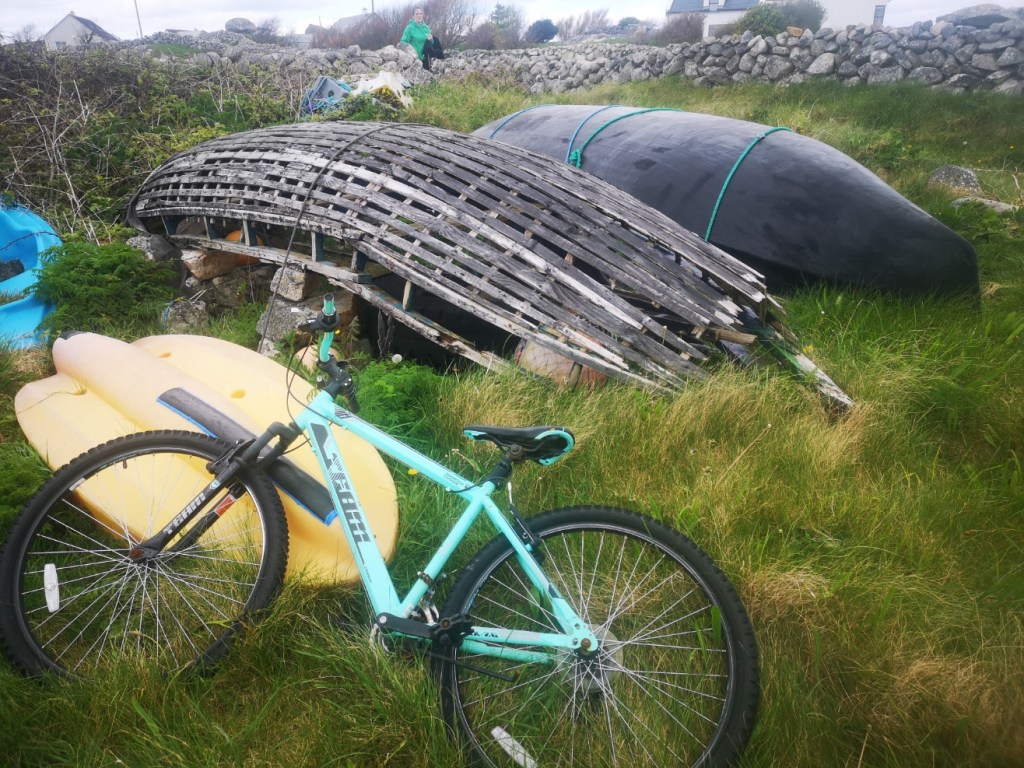
The social forces that dictate the use of language are complex and often it is the “typical” behaviour of children that will trump anything else we can do to encourage the use of our target languages. So, providing schools, activities, sports, etc. as motivation to speak Gaeilge is great, but it still boils down to some dominant, cool kid imposing his will on the others. These are very strong forces and even just thinking about it, transports me back to my own difficult experiences of negociating high school life. The pressures to fit in were tremendous, especially for those who did not fit in for one reason or another. I still recall what it felt like to called a “frog” by other kids.
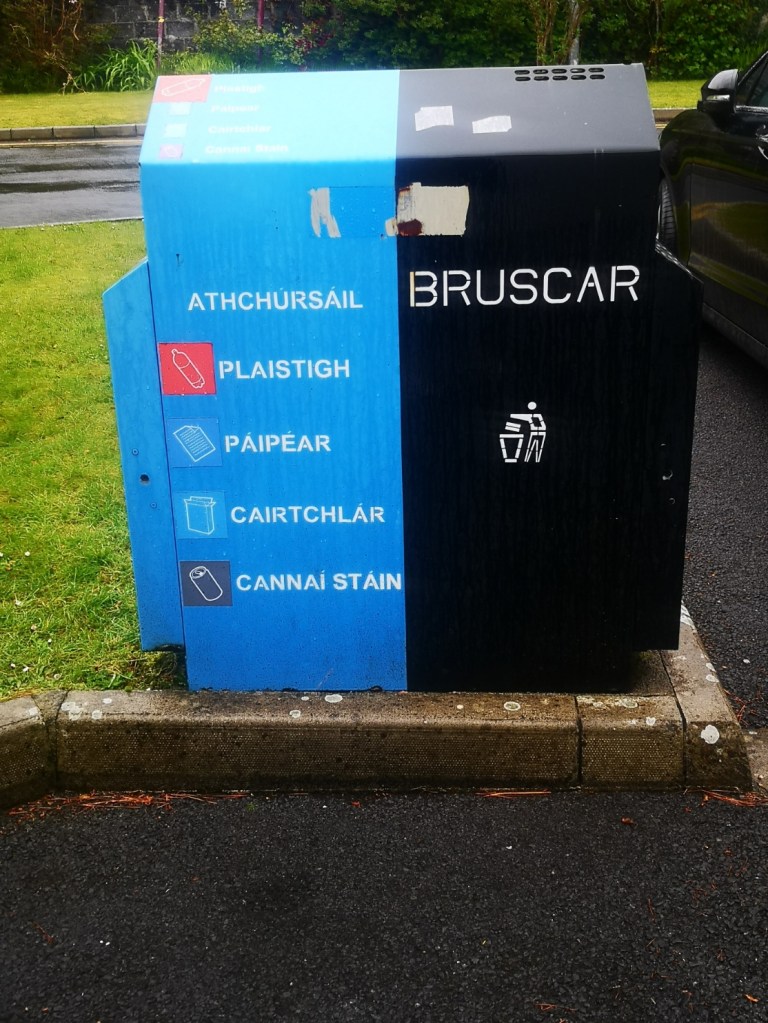
Many parents, who are raising their children through the language of their cultures, have told me about that phase where their kids simply stopped speaking the language. Any pressure, encouragement, or encentives are actively resisted. These parents are deeply saddened and feel like they have failed to create the supportive environment at home to foster their childrens’ cultural expression. Certainly, this is especially true when raising a family outside of the traditional cultural cradles. The Gaeltacht regions, with their supportive environments – where everyone around you is speaking Gaeilge, where there are Gaelscoileanna (schools where Irish is the medium of communication), where you have access to all the services, signage, and top quality sports facilities, etc., we are not immune to these globalizing and conforming pressures.
Something else comes to mind from the above experience. I am in awe of the first kid who said “as Gaeilge”. He stood up! He spoke out! It didn’t work… or did it? Did that courage come out of the Gaeltacht? Is there a seed somewhere in his mind, and the mind of his friends, that will blossom into an adult fluent speakers? Will some of them become leaders in the community and stand up for the language? Will they confidently live their culture in the face of the tsunami?
The world is changing fast. Are you ok with this? Globalization is having an impact on the biosphere and the ethnosphere. We cannot NOT do something! I am inspired by areas like the Gaeltachtaí where it is normal to speak Irish. We need places where the language has even the slightest of advantages.
There are heavy, dark clouds on the horizon.
We seek rays of hope.
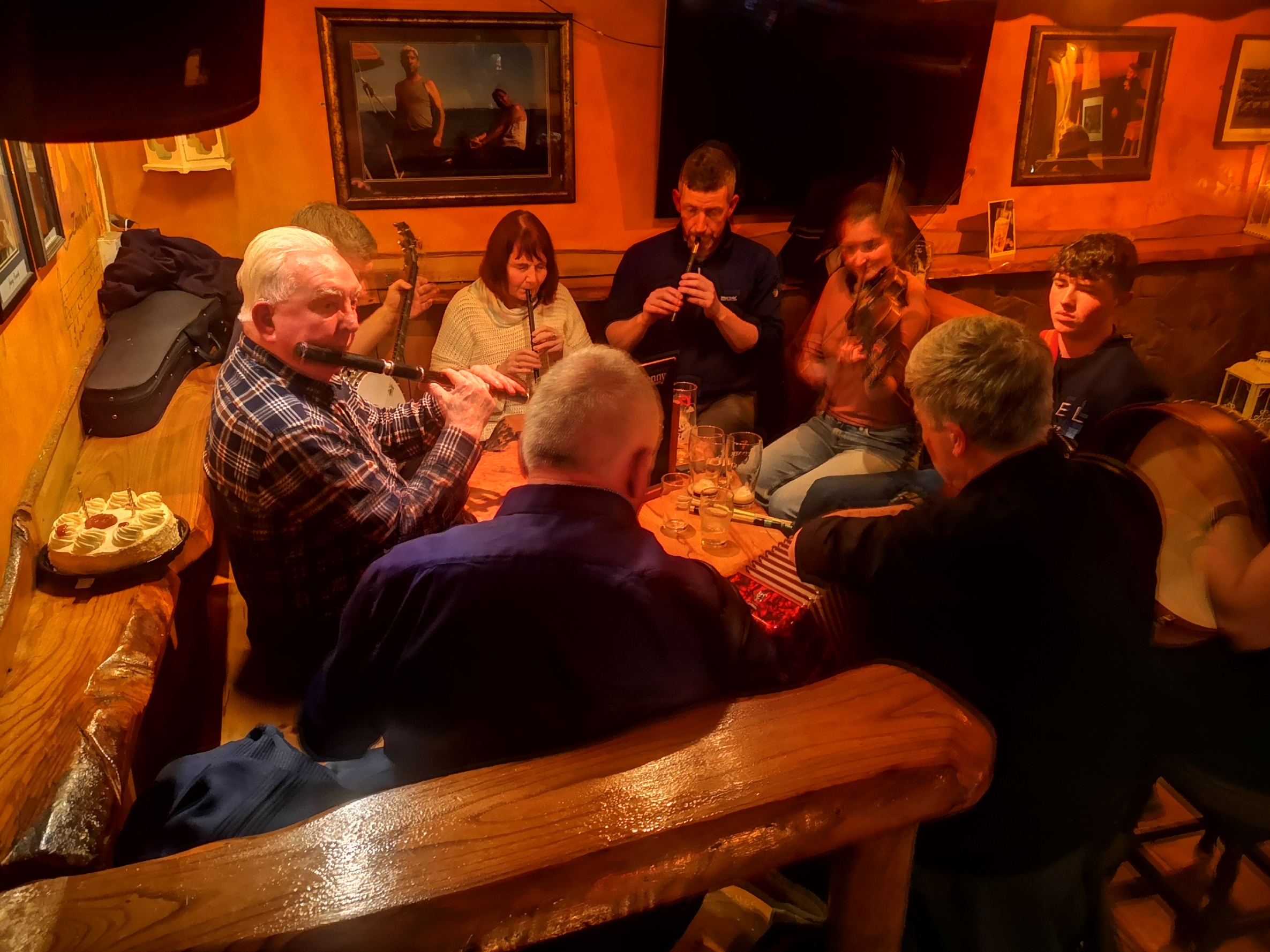
 Cumann an Ghleanna