Siar agus Aniar 8
One of my the primary goals, indeed of the Siar agus Aniar Ambassador exchange between Ireland and Nova Scotia, is to improve my fluency in the Irish language. Other goals include making real and personal contact with people and institutions working to make their communities thrive and getting to know about life in the Gaeltachtaí. What lessons can be brought back to Nova Scotia?
I am midway through a course at the Acadamh. It is for students at Coláiste na Tríonóide – Trinity College, in Dublin – and I have been their as an observer. After this, I will be doing a longer course destined for international learners. With a more solid base and fluency in the Irish language, I can serve as a strong presence and support for encouraging Gaeilge in Nova Scotia.
There are many kinds of learners. What works for one, will not necessarily work for another. I have been thinking about what is working for me as I improve my ability to speak and understand the Irish langage and as I live for a period of time in the Gaeltacht of An Cheathrú Rua.
Meta-learning is a branch of metacognition concerned with learning about one’s own learning and learning processes. Below are some observations that I have made about my learning style. I believe that this information would be applicable to many learners.
Speak – Most people struggle with speaking a new language. Abstract, non-performance learning – book learning – is less stressful for them. Indeed, sometimes I will initiate a conversation in my target langage. Other times I chicken out. Observing learners over the years, I see how a large percentage of people are challenged at speaking. It is much easier to stay within the confines of a theoretical study of languages. Schools have prepared us well for abstract, disconnected learning.
I generally keep on forcing myself to engage in conversation even though I find it very difficult myself. Speech is a very human form of communication. It is social. Studying a language but never speaking it is unnatural. Imagine learning to play an instrument but never playing with other musicians! When we speak, all of our learning becomes operational at the same time: grammar rules, pronunciation, vocabulary, common expressions, etc. It is the most powerful way to connect and synthesize the diversity of more intellectual approaches to language learning.
Are you hiding behind the safety of a grammar book?
Become active – Make opportunities to speak. All of your passive learning will become activated. During Siar agus Aniar, the best occasions to speak are during course breaks, lunch hour, and evening socialization. Classrooms often focus on grammar or more formal aspects of a language. Seize those opportunities to bring your language into the real world. Especially if you struggle. Just do it! The more your mouth forms the words, the more your ears hears the sound, the quicker you will learn. There are other learners out there. Find them. If your language learning is easy… it will not work.
What can you do to create new opportunities to speak your target language?
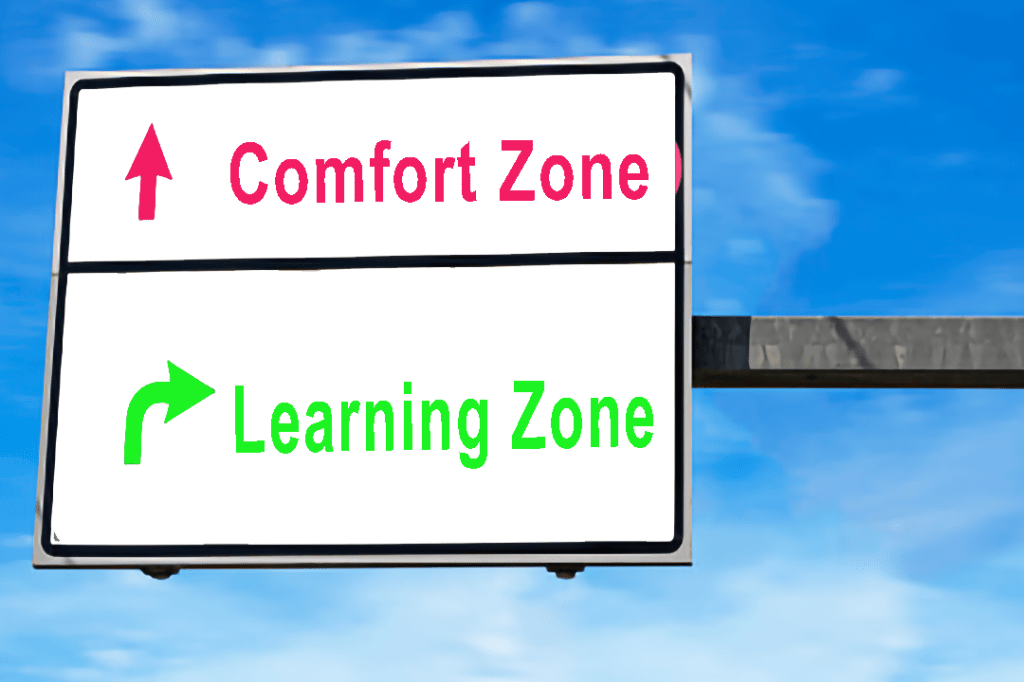
Confidence – such a fragile beast! Some of the best language learners that I have known simply do not care about how they sound when they speak. They just do it. They throw caution to the wind and all the grammar rules and proper pronunciation gets slaughtered on the altar of communication. If you are not putting yourself into situations that are above your level of comfort, you may stay stationary on your language journey. You might stay stuck in a « learner’s » mode. Although Duolingo is a great tool for starting learning, for example, it could lead to a comfortable plateau. It is an illusion of learning and very few people become speakers with such apps. Identify your safe zone and look for as diverse an array or real world situations where you can speak the language.
What situations terrify you?
Culture – language = culture. The beauty of human communications is most apparent where language and cultural expression operate together. We speak languages to share our life experience. In this intersection, words have sense and beauty. Abstract becomes the sensual: see, hear, touch, smell, move, share, remember, sing, dance, tell stories. The language that you are learning ties it all together into a unique experience of life on this planet. If you are learning Irish, go to a céilí! Listen to a poet. Write poetry! Listen to Raidió na Gaeltachta or TG4. Express yourself in new ways. Describe life through the lens of your language. Take a walk in nature with your learning group. Go for coffee together and just talk. Seek out friends who want to become speakers, not just learners. Surround yourself with risk takers!
What can you do to bring your
language to life?

It should be noted that visiting a Gaeltacht – an area where the language is still part of daily life – certainly brings all these factors into easy play. Finding the time and money to immerse yourself in such a place is not, however, something that one can do everyday. The challenge is to bring the language you want to speak into your world as well.
These are just my observations and take them for what it’s worth. If you find that your language learning has stalled, I hope they might inspire some of you to take that next bold step.
 Cumann an Ghleanna